How many rounds, and how long should the night run?
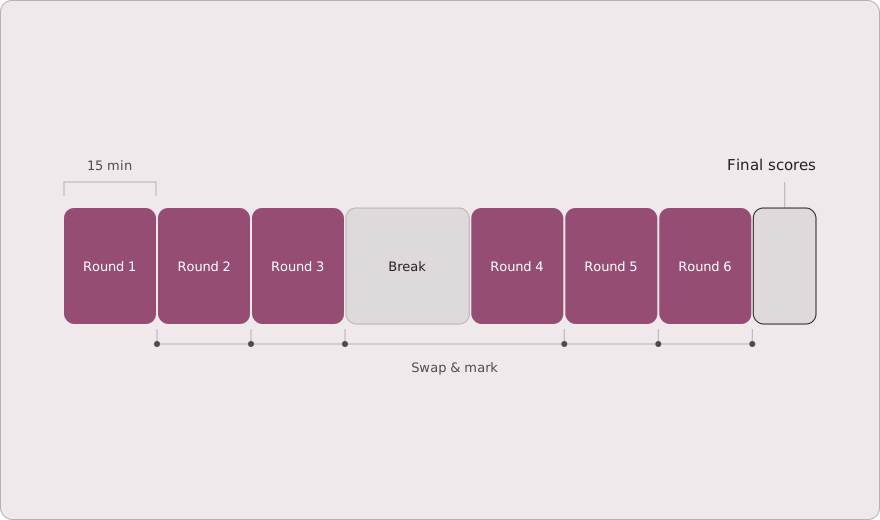
Six rounds of ten questions is the shape most working quiz nights converge on, and the arithmetic explains why: a round takes twelve to fifteen minutes to ask, answer and mark, so six rounds with a break lands a little over two hours — an evening, not a siege. Past eight rounds the room thins before the scores are read.
Vary the round type before you add rounds: a picture round, a music round, a connections round where the answers share a theme. Variety resets attention the way an extra general-knowledge round never does, and it gives the teams that lost the history round a reason to stay in it.
How do you pitch questions people enjoy?
Aim for a room that answers well over half of everything, and write each round as a slope: two openers most tables get, six in the middle that reward talking it out, two at the end that decide the round. The middle six are the craft — a good quiz question is one a table half-knows, because the arguing is the fun.
Every question needs exactly one defensible answer, checked before the night rather than negotiated during it. The questions that ruin evenings are not the hard ones; they are the ambiguous ones, and the host who has to rule on “technically also correct” three times has lost the authority the scoring needs.
How do you score without arguments?
Tables swap sheets and mark each other — it is faster than the host marking, and it makes the scoring everyone’s work instead of one person’s rulings. Read the answers aloud, take disputes immediately, and post running totals between rounds so the leaderboard is a fact rather than a reveal.
Plan the tie-break before you need one: a nearest-number question is the classic because it cannot tie again. And decide in advance what a joker round is worth if you use one — double points declared before a round starts is a tactic; declared after, it is a gift.
What changes when the quiz is a fundraiser?
The quiz stays the same; the money moves around it. Entry per table rather than per head is easier to collect and seats teams of uneven size fairly, and the reliable second earner is a raffle drawn between rounds — numbered tickets sold at the door, winners drawn in the open while the marking happens.
Keep the fundraising mechanics as visible as the quiz itself: publish what the entry buys, draw the raffle where the room can see it, and announce the total raised before the final round. A fundraiser that accounts for itself on the night gets invited back.
Where does a wheel fit into a quiz night?
Two draws benefit from being taken out of the host’s hands. The round order: drawn in the open, it stops any team claiming the sequence favoured the specialists — the trivia wheel page opens with exactly this wheel. And the between-rounds raffle, where a number wheel over the ticket range is a draw the whole room can watch.
What a wheel should not do is referee content: it draws the next category, never the right answer. The host stays the authority on the quiz; the wheel takes the two decisions where being seen to be random is worth more than being trusted to be fair.
Run a quiz night in five steps
Keep reading, or start drawing
The custom wheel guide builds the round wheel and the raffle wheel this evening leans on, and the Secret Santa guide organizes the other event the same room keeps asking you to run.
The trivia wheel opens with a round wheel already set up, elimination on; the number wheel covers the raffle tickets and the tie-break.