Raffle, prize draw or lottery — which are you running?
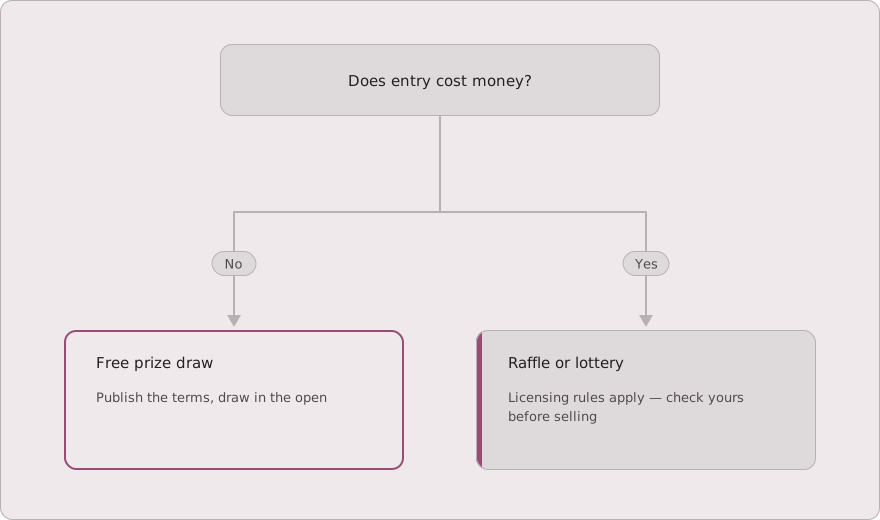
The line that matters almost everywhere is payment. A free prize draw — enter by commenting, no purchase — is lightly regulated in most places. The moment tickets are sold, most jurisdictions call it a lottery or raffle and regulate who may run one, usually reserving it for licensed operators, registered charities or small societies.
This page is not legal advice, and the honest version of the advice is short: if money changes hands for a chance to win, check your local rules before you post, not after. Fundraising bodies publish plain-language guidance for exactly this question, and the search that finds yours takes five minutes.
How do you sell or assign tickets online?
Number them, and let the number be the entry. A spreadsheet with one row per ticket — number, name, how it was paid or earned — is the entire infrastructure a small raffle needs, and the numbered ticket is what makes the draw checkable afterwards.
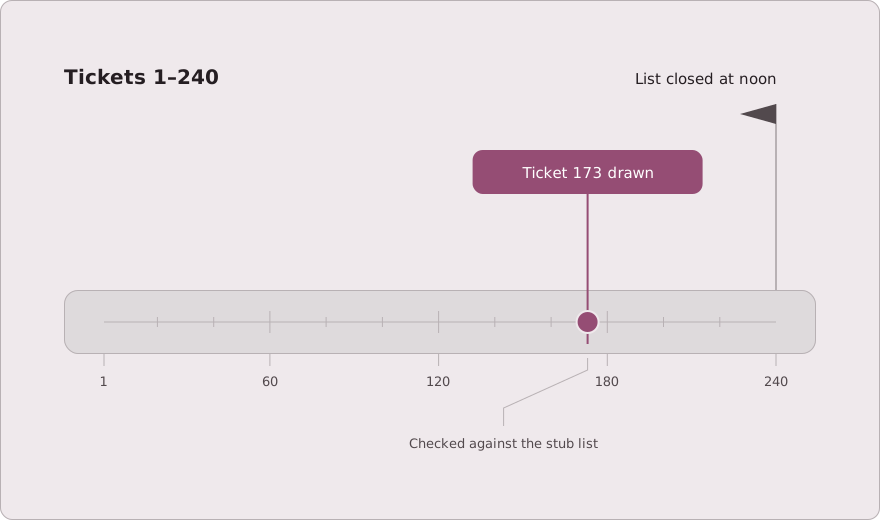
Close sales before the draw and publish the range. “Tickets 1 to 240, list closed at noon” is one sentence, and it removes the most common suspicion — that entries kept arriving until the right person could win. An entrant who knows the range can check that their number was in the draw.
How do you run the draw itself?
Draw the number in the open. A number wheel over the ticket range, spun once on camera or in a live session, is a draw a remote entrant can actually watch; the winning number is looked up against the stub list, which never has to leave your spreadsheet.
For several prizes, elimination mode retires each winning number as it is drawn, so second prize is drawn from every ticket that has not already won — which is what a prize table means. The draw log keeps the order the numbers came up, which is your results list, already written.
What record should a fundraiser keep?
Enough that a stranger could reconstruct the evening: the published range, the closing time, the recording or the live-session link, and each draw’s id with the number it produced. That is one screenshot of the log and one line in the announcement, not an accounting exercise.
Publish the results where the entries were taken — the group, the page, the newsletter — with numbers rather than only names, so every entrant checks their own ticket instead of asking. A raffle whose results must be asked about is a raffle that gets asked about all year.
How do remote entrants watch the draw?
Run it as a live session and post the link where the tickets were sold. Everyone who opens it watches the same wheel land at the same moment — the draw runs on a server rather than on your machine, so a delayed stream or an edited screen recording stops being an available argument.
The room outlives the moment, too: the results board shows what was drawn to anyone who arrives late, and closing the session freezes it. Hosting needs a free account; ticket-holders need nothing but the link.
Run an online raffle in five steps
Keep reading, or start drawing
How to pick a giveaway winner covers the method behind any draw, and the giveaway rules guide turns the redraw and unsold-ticket decisions into published terms.
The raffle winner picker draws from names; for numbered tickets, the number wheel draws the range directly.