What makes a giveaway draw fair?
Three things, and none of them is the random number: a complete list, equal treatment of equal entries, and a result the people who lost can check. Most disputed giveaways fail on the first — entrants who qualified and never made the list — or on the last, a winner announced with no trace of how they were chosen.
Randomness itself is the easy part; any decent tool draws from a source nobody in the room can predict. What separates a draw people accept from one they argue about is whether the list was fixed before the draw, whether extra entries were visible rather than whispered, and whether anything exists afterwards that ties the announcement to an actual draw.
Which tool should you draw with?
Anything visible beats anything hidden. Names from a hat work at a bake sale and fail online, because nobody watching a video of your hand trusts your hand. A bare random number generator is fair and shows nothing — a screenshot of “17” convinces no one. A comment-picker service fetches your entrants for you, at the price of signing in with your account and a per-comment cap that becomes a subscription.
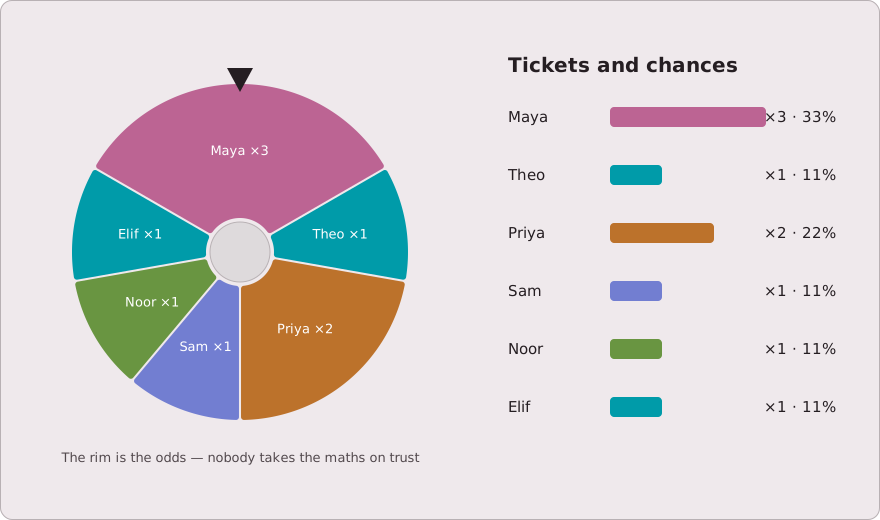
A picker wheel occupies the useful middle: the list is on the rim where everybody can read it, extra entries are visibly wider segments, and the spin is an event you can film or run live rather than a number that appears. It fetches nothing — you paste the list — which is exactly what keeps your account out of the transaction.
How do you handle bonus entries, duplicates and disqualifications?
Write the rules before the post goes out, because every decision made later reads as favouritism to whoever it goes against. How many entries one person can earn, what earns them, and what disqualifies — a rule invented after the deadline is a rule invented for someone.
Then make the arithmetic visible. On a wheel, a person with three entries carries a weight of three and a segment three times as wide; a duplicate you did not intend folds into one entry instead of quietly doubling a chance. Disqualify before the draw, in the open — never after the draw because the wrong name came up.
How do you draw in front of the audience?
Record it, or run it live, and show the list before the spin. A recorded spin shows the entrants standing still, then the draw — and because the result is fixed by the random source before the wheel starts moving, a cut before the spin is not a cut that could have changed anything.
A live session goes one step further: you create a room, share the link, and everyone who opens it watches the same wheel land at the same moment, drawn on a server rather than on your device. That is the strongest answer to “rigged” a creator has, and it is one entrants can attend rather than take on trust.
What belongs in the winner announcement?
The winner, the method, and the receipt. Name the winner the way they entered, say in one sentence how the draw was made, and include the draw id — the short code each spin stamps into its log — so the announcement points at a specific draw rather than at a claim.
Then the warning that protects your audience: say plainly that you will never message anyone asking for a payment or card details to release a prize. Fake winner messages from lookalike accounts follow every public giveaway, and the announcement is the one message every entrant reads.
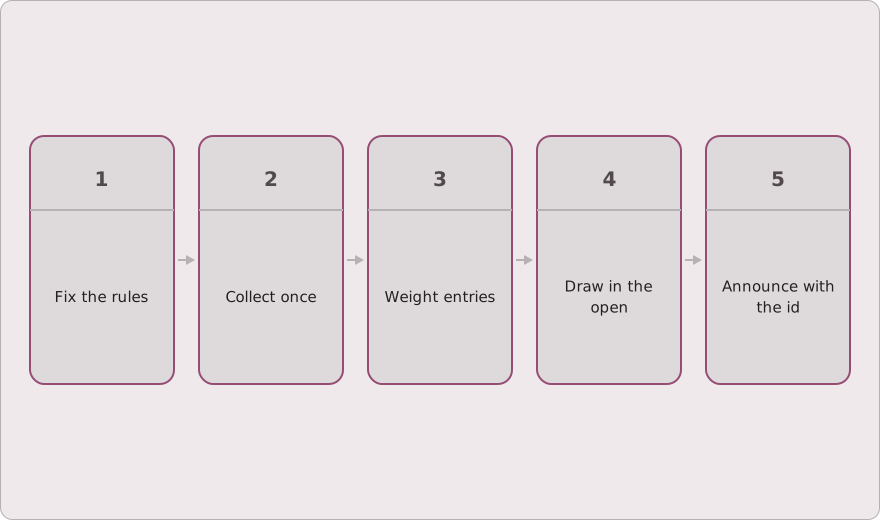
Run a fair draw in five steps
Keep reading, or start drawing
Running the giveaway on a specific platform is its own craft — the Instagram guide walks the whole campaign, and the online raffle guide covers ticketed and fundraiser draws.
Ready to draw? The raffle winner picker opens with an entrant wheel already set up, and the plain name wheel is the same instrument with nothing pre-decided.